Kenya’s absence from the top tier World Rugby Sevens competition has opened new avenues to the men’s and women’s players who are demonstrating their prowess in other emerging top competitions.
The invitation for men’s and women’s teams have been a welcome addition to the technical development of the players as they rub shoulders with some of the players in the top tier and other countries. Initially, Patrick Odongo and Kevin Wekesa got an initial invitation to a new competition in India, Rugby Premier League which is now in its second year.
This invitation opened up an avenue for more players to come to the second division this year. As a result, 14 players have been invited to another new competition, The Ultimate Sevens which kicks off in Cardiff Wales on September 12, 2026.
Debut Appearance
Two players who made their debut in the RPL, Samuel Asati and George Ooro exclusively talked to www.thesportsnewsarena.com about their experience as they look forward to the ultimate sevens debut. In this first interview, Asati recalls playing for The Delhi Reds that was captained by Patrick Odongo.
“The experience was amazing. What I picked up most was the team bonding between players from different cultures under a coach like Tomasi Cama,” Asati stated. Cama who recently retired as the coach for the New Zealand Sevens team after a good run as a player was the glue that held the team together.
His unique coaching skills and ability to effectively communicate what was required of the team and players immediately caught Asati’s attention. “The onus is on the coach who has a very good idea of ensuring the players bond,” he explained.
Team Songs
To break the ice, Cama resorted to introducing team songs within the squad and led by playing a box guitar. “After every training session we met and he played the guitar as we sang along. That’s a unique way of ensuring the players bond,” Asati observed.
Cama’s coaching tactics also gave Asati an insight of what happens within the New Zealand team. Ordinarily, Cama has a plan. “He is not vocal but precisely knows what has to be done,” Asati offered.
In the set up for the Delhi Reds, Cama encouraged players to take ownership of their actions and the decisions they made on and off the pitch. “He had a game plan but when something was not working, he communicated and left an option for the team to also make adjustments,” Asati explained.
Simple Plan
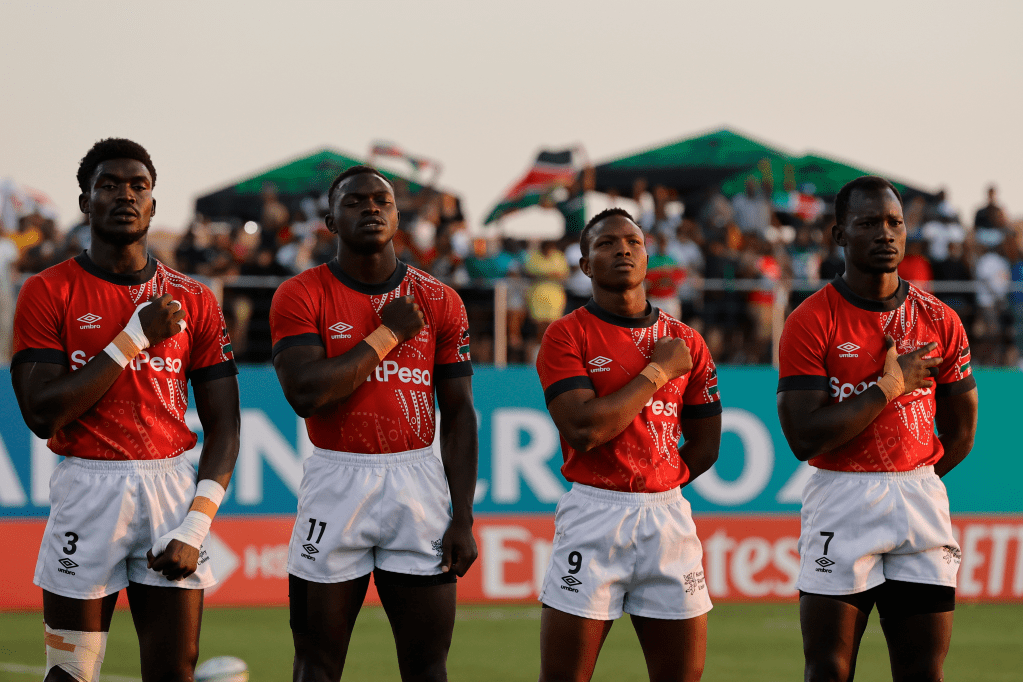
Overall, the plan was simple. The team had instructions on how to approach every match, incorporate new ideas and come up with a result. “What he insisted on is for players to take initiative every time,” recalled the Shujaa scrum half.
Although each franchise had players from different countries and cultures, Asati recalled it was not difficult to bond. “However different rugby players may be, they are just as ordinary.”
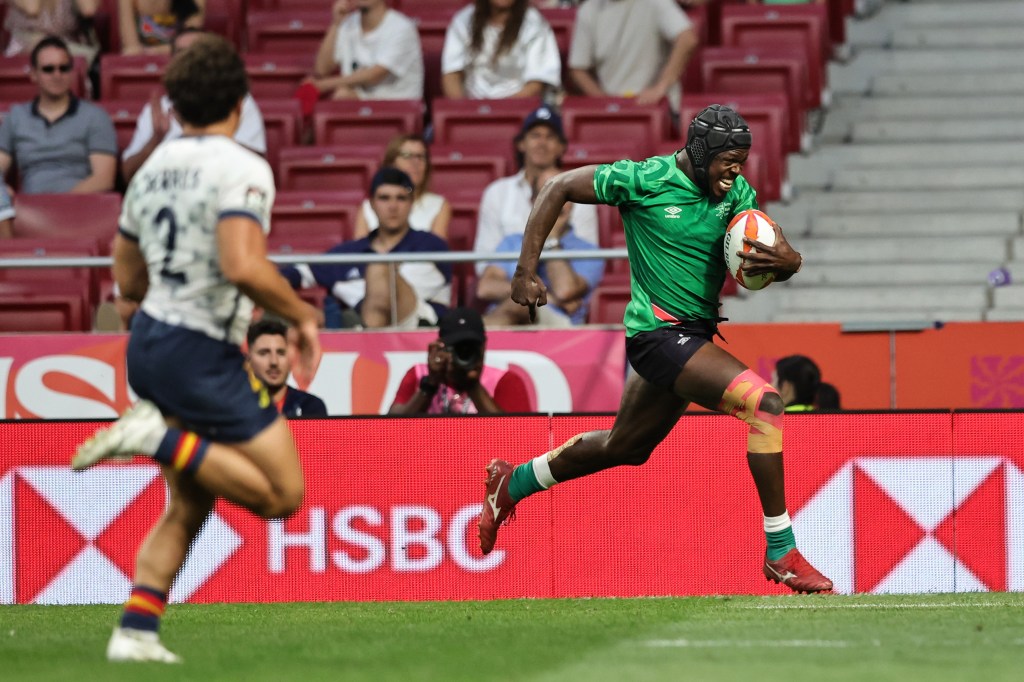
In every team, there is always that standout player and in Delhi Redz, that was Argentinian Luciano Gonzalez. “He is quite a character, funny and a joker. You need someone like that,” Asati admitted. Joseph Serres, the right wing was the playmaker for Delhi Redz. “He is the kind of player you depend on,” Asati added. The equivalent of Gonzalez in Shujaa is George Ooro, the captain.
Minimal Assessment
When the players landed in India, they were already conditioned after playing in the World Rugby Championship so the technical bench had a minimal assessment on their fitness. They then embarked on a one-week preparation to jell and work on combinations. It was a gradual build up at every match.
The priority of the RPL is to develop local talent and every franchise had instructions to field two players at any time. “My main role and that of other players was to share their experience with the local players towards achieving a gradual build up for the 2032 Olympics which is the main aim of the RPL,” Asati stated.
At the back of their minds, the players were aware that rugby was encroaching on an unfamiliar turf that belongs to cricket, the national game for India. To overcome this, the organizers relied on aggressive marketing and acquired strategic broadcasting partners that made it possible for the tournament to be shown on national TV.
Learning Curve
According to Asati, this is a model that Kenya could learn from. To maximize this, the organizers introduced a toss of the coin before the cameras and a brief chat with the two captains before the match just like it happens in cricket.
The player took some good lessons from his debut appearance in the RPL. “If Kenya has to emulate what is happening in RPL, there must be serious investment, aggressive marketing and securing lucrative broadcasting partners. To complete the picture, the same should be done for individual players and teams,” Asati observed.
Although Delhi Redz was made up of mostly players from Kenya, there was still a tight bond with Kenyans from other franchises as well as players from other countries. This was because of frequent interactions in World Rugby competitions. As soon as the draft was complete, most of the local players touched base with Kenyan players before they arrived in India.
Smaller Crowds
As expected, the crowds watching the tournament were much smaller than what the players were used to since it was a new concept and rugby was not a national sport. On the flip side, the viewership was huge on national TV.
In summary, Asati feels that the coaching skills across the board by such a high profile individual as Cama was nearly at the same level with what Kevin Wambua was doing at Shujaa. “The messaging was similar. I believe they are on the same level although Cama is composed, gives you the game plan, tells you what to do and it is up to the players and teams to execute,” Asati added.
At each break. Cama would communicate any changes. “ He is a chilled guy unlike the Kenya coaches.”
Standout Players
Players who stood out for Asati were teammate Alasio Naduva, Javed Hussain, Deepak Punia, Maurice Longbottom, and Kevin Wekesa. “It was good to see the other side of Odongo as a captain because in Shujaa, he is quiet. The biggest memory was team bonding and singing Fijian songs was quite an experience,” Asati concluded.
“I thought it was a joke when the secretary told me to hand in my resignation after the World Rugby Sevens championship in Bordeaux,” Andrew Amonde who was relieved from his role as a strength and conditioning coach of the Kenya seven-a-side rugby team recalled.