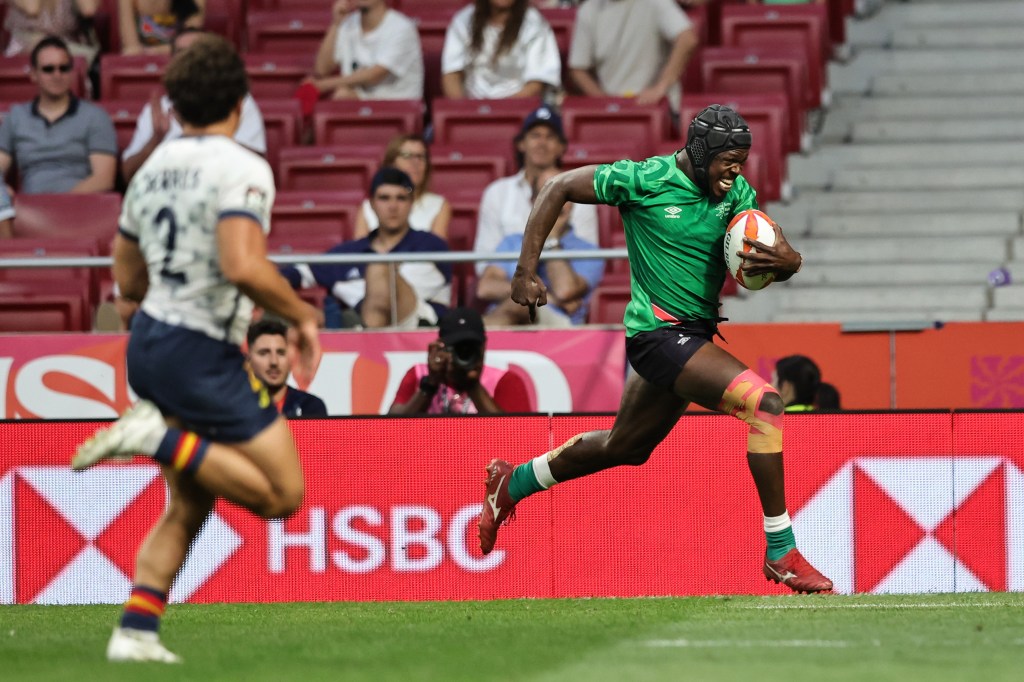
A decision by World Rugby to reduce the number of teams in the World Rugby Sevens Series from 16 to 12 and eventually to an elite top eight has led to a revival in regional competitions.
The silver lining is an introduction of prize money, aggressive marketing and new broadcast agreements that have opened new global audiences. Initially, the new order that culminated into categorising the seven-a-side competition in three divisions drew mixed reactions from coaches, affiliated Unions, and players.
Some of the concerns were the replacement of the Rugby World Cup Sevens and exclusion of emerging countries which were invited – according to the geographical locations – to play against the top teams. Under such an arrangement, teams like Zimbabwe, Uganda, Tonga, Cook Islands, Uruguay and others got a rare chance to participate in the global championship.
Condensed Format
The condensed format has three categories with a top tier competition featuring eight teams who face off in a league style in six venues before proceeding to a three-venue play off where they are joined by four top teams from the second tier competition. Second tier teams have three tournaments.
At the championship, featuring 12 teams, the top eight remain in the top tier. Since only eight teams could compete in the top tier, the remaining teams have been unable to compete consistently and remain in good shape for the better part of the year.
This vacuum has presented an opportunity for most of the regions to look into the possibility of starting alternative tournaments with a different theme while maintaining a competitive edge to attract new sponsors. The game changer has been an introduction of prize money and a slight variation to the playing format.
Alternative Competitions
Already, these alternative competitions are growing. In Fiji, the reintroduction of the Fiji Coral Sevens which featured 16 teams set the ball rolling. With adequate sponsorship, the organizers are able to offer prize money to the winning teams and ensure free entry.
As a result, most of the top teams from the top tier countries use the Fiji Coral Sevens as a build up for their next tournaments and sometimes send their development teams. Besides the Fiji Coral Sevens, India borrowed a leaf from a successful cricket league to start a rugby theme competition.
The Rugby Premier League, introduced in 2025 featured players from over 20 countries divided into six franchises. This year’s competition saw the introduction of the women’s category which had four teams.
Played in June after the completion of WRSS championship stage, the RPL was played in four quarters of four minutes. At the end of the league stage, teams advanced to the knockout stage.
Ultimate Sevens
In September, another tournament, Ultimate Sevens enters the stage with six clubs competing across four European cities. Most of the players have been drawn from different countries with some of them playing in the top tier.
What could be important in this new competition is an opening for the shorter version of the game to thrive in a region that lays emphasis on the 15’s format. In the 2025/26 WRSS season, a combined Great Britain team did not do well in the men’s and women’s categories.
Additionally, most of the countries such as Wales, Scotland, and England who competed in the Series have seen less resources allocated to seven-a-side programs. Forming one team under Great Britain has also seen little success. Another team, Ireland, faced the same problems.
Sevens Revival
Therefore, Ultimate Sevens could be the competition that revives the shorter version of the game in Europe. At the moment, only Spain and France are in the top tier.
Elsewhere, Africa has been thinking about starting a circuit along the same lines as the other regions. Travel within Africa presents a logistical nightmare despite the presence of established tournaments within the African region. One of the longest running tournaments is the annual Safari Sevens to be hosted in Nairobi from October 9-11 this year at the Nyayo National Stadium.