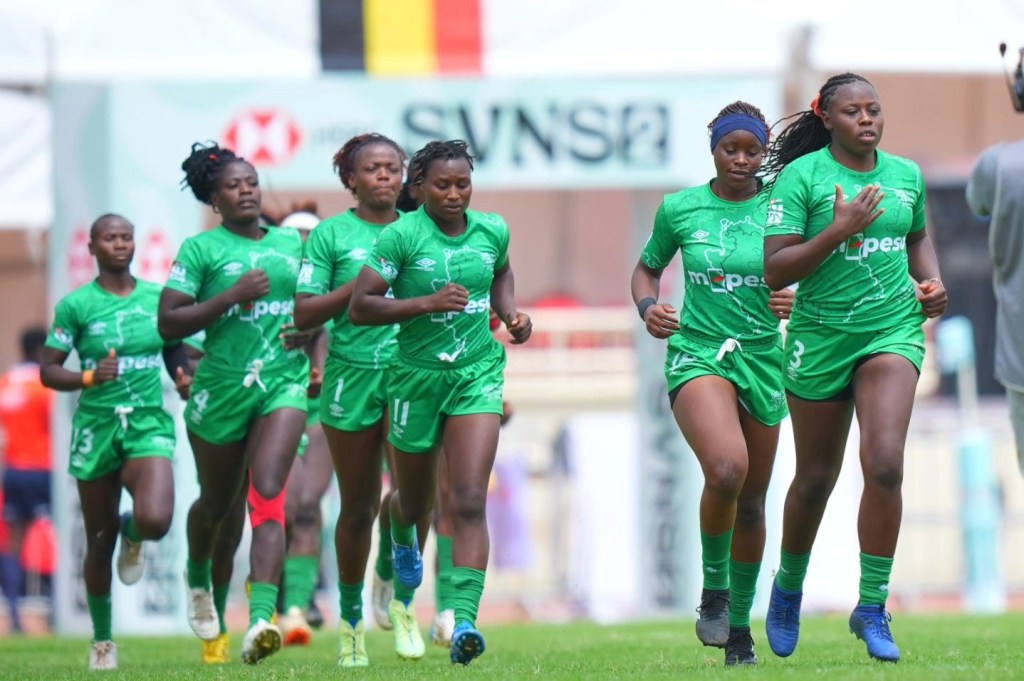
As the dust settles on the World Series Tier 2 competition, www.thesportsnewsarena.com can now exclusively reveal what led to the debacle by Kenya Lionesses that saw them fail to qualify for the crucial championship phase which begins in Hong Kong on April 17, 2026.
A systematic failure by the Kenya Rugby Union and a clandestine leadership struggle is behind the spectacular failure of a team that in the last championship was on the verge of making it to the top competition before World Rugby changed the format. After finishing second in the Rugby Africa Women’s 7s, the morale was already low.
Kenya Lionesses had outstanding allowances at the start of the preparations for the WR Tier 2 competition. Despite an arrangement for a training camp in Spain, the morale was already low.
Greater Heights
Also, the suspension and removal of Dennis Mwanja, the coach who steered Kenya Lionesses to greater heights largely contributed to the downfall of a team that was seen to be on the rise. Up to now, the circumstances that led to Mwanja’s departure are still unclear.
Officially, KRU alleged ‘safeguarding’ issues. Mwanja challenged the allegations and requested to give his side of the story.
Behind the scenes, Mwanja’s exit was choreographed on Ngong Road by individuals who had suggested a succession plan. In this leadership ‘coup’, the current coach Simon Odongo was to replace Mwanja during a transition that would lead to one of the players assuming the role after serving as an assistant.
The goal was to have a female coach for Kenya Lionesses. Consequently, some of the former players who were not qualified at the time were enrolled in a program to fast track their certification and eventual leadership. In this scheme, the current team manager was also supposed to either be elevated to another position or retired to be replaced by an individual who is in KRU’s good books (name withheld).
Players Approached
Additionally, players had also been approached to join one of the teams aligned to this new leadership group with promises of being called up for national duty. This was the scenario that preceded preparations for the team for the three-tournament Series. This information was corroborated by various players interviewed by www.thesportsnewsarena.com.
Recently. www.thesportsnewsarena.com contacted a KRU insider who is familiar with the national team issues who confirmed the predicament and agreed with allegations of leadership struggles. The source said KRU had limited personnel qualified to coach the women’s national teams.
Efforts had been made to identify prospective candidates but the absence of likely individuals painted a dark picture. Two former players and a third one had been recommended and trained but did not have the experience while a third individual was in the process of being fast tracked.
Cursory Glance
A cursory glance at the women’s league, dominated by Mwamba, Kenya Harlequin FC, Impala, and Nakuru does not offer many alternative candidates who have the capability of being elevated to the national team levels.
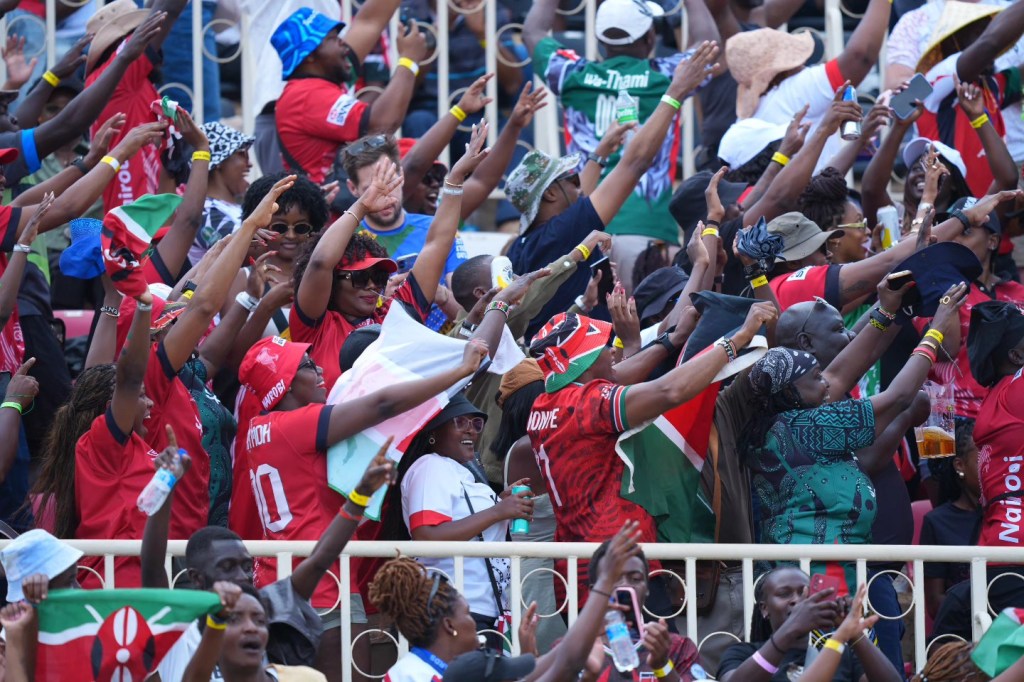
It came as no surprise when players silently complained about their preparations and the results during the first tournament in Nairobi in February should have sent an early trajectory of what would have been expected. In this home tournament, Kenya Lionesses failed to take advantage of the homeground support to put up a good performance.
The second tournament in Montevideo followed a similar script. By the time the teams headed to the third tournament in Sao Paulo, Brazil, only one spot was still in contention and it was back to arithmetic and dependence on the performance of other teams.
Teams that had qualified for the championship strategically used the tournament in Sao paulo to give fringe players a chance to compete at the top level as well as strategize for the next challenge. For Kenya Lionesses, it was a fight for survival as they needed an outright win to qualify.
Home Support
It came to the last match against hosts Brazil who banked on home support to win the last match and qualify. They were able to do what Kenya Lionesses were unable to at home.
Most rugby pundits saw a team that woke up too late in Sao Paulo and heaped praises on a solid performance asking where this Kenya Lionesses team that was in Sao Paulo was in the opening two tournaments. Was it because the other teams that had qualified or had no chance of qualifying took their foot off the gas pedal?
The build up for Kenya Lionesses to the WR Tier 2 competition will be a tough one. Most of the players who were in the chase may not be in the campaign. Mwanja had started a succession plan which ended in his ejection. A player from the neighboring country Uganda commented on social media that Kenya Lionesses need to drain the swamp by replacing the current technical bench, appoint coaches on merit.
Big Question
Whether KRU will listen to this is a big question. Paul Odera, the KRU Director of Rugby had the last word by stating Kenya Lionesses had the capability of doing well as demonstrated in Sao Paulo. “What we lack is a vibrant national championship where players can gain valuable experience,” he suggested.
Odera denied a coaching vacuum in Kenya Lionesses. “We have a centralized coaching unit. Since I was appointed, Kenya Lionesses have always shared resources with the men’s team,” he responded when asked about the lean Kenya Lionesses bench that does not have an assistant coach.
Team Lists
The KRU official also said Kenya Lionesses performance in Sao Paulo was not reflective of the teams fielded by the opponents. “Every team wants to win,” he stated. A quick glance at the team lists of the three competitions could provide further evidence.
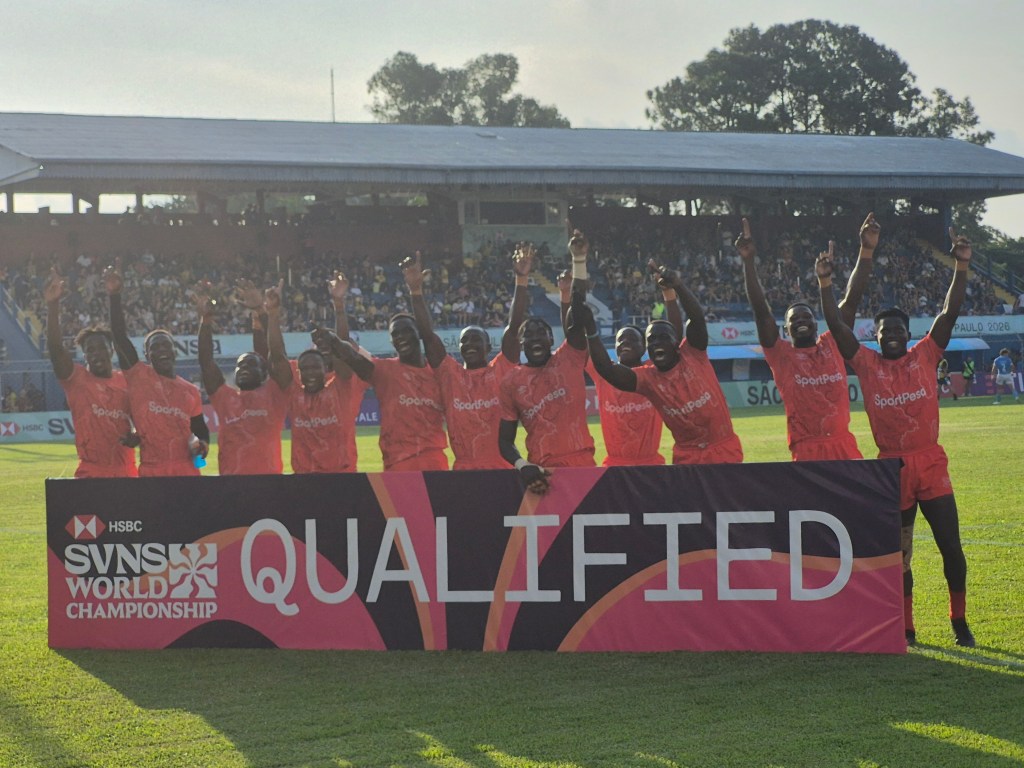
As Kenya Lionesses lick their wounds, the men’s team Shujaa prepare for the championship in Hong Kong where they have been drawn in the same pool with the USA, Australia and New Zealand. It is interesting that Kenya and the USA who finished in the top two positions at the end of the WR Tier 2 competitions have bee drawn in the same pool.

 Sports News Arena