
Blitzboks, the South Africa men’s seven-a-side rugby team have automatically qualified for next season’s World Rugby Sevens Series by virtue of winning the top-eight league.
The competition went down to the wire between the two title contenders Fiji and South Africa. A bruising 10-7 win over Fiji in the final tournament in New York on March 15, saw Philip Snyman’s charges claim the title.
In an interview with seasoned South African journalist Brenden Nel who has covered the shorter version of the game for over 10 years, Snyman, said the World Seven Series top tier competition that features eight men’s and women’s teams had the same feeling as the discontinued 12 and 16-team formats only that the games were much tougher.
Decisive Results
Each result was decisive and determined whether a team would reach or miss the final stages. “It is much tougher to get to the semis,” Snyman admitted. South Africa won three consecutive finals – Perth, Vancouver, New York – which was historic on their way to winning the overall league title.
Consequently, they automatically qualified for next year’s top tier league. The rest of the teams, Fiji, Great Britain, New Zealand, Australia, Spain, France and Argentina must justify their place in next season’s competition by playing in a championship that also involves four top teams from the second tier competition.
But, South Africa, who won four of the six league tournaments will also be part of the championship that kicks off in April in Hong Kong before proceeding to Valladolid, Spain and the final in Bordeaux, France.
Romance and Magic
Although Snyman acknowledged the intensity of the top tier competition, he added the World Sevens Series had lost most of its romance and magic. He recalled that in the 16-team format, there were 15 core teams and an invitational team from the various regions which saw teams like Uganda and Zimbabwe compete and cause upsets.
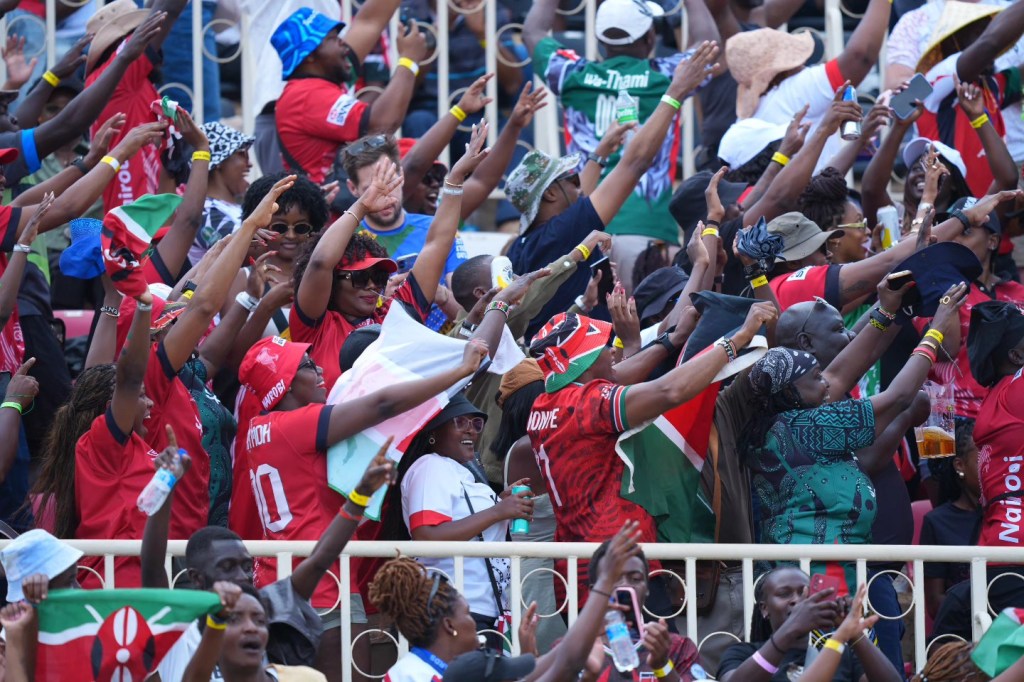
“Now you take away that regional component and possible upsets,” Snyman argued. Also, the glaring absence of Kenya’s devoted fans created a noticeable vacuum. “Personally, I prefer the 16-team format. World Rugby had their reasons for what they are doing. If I had a say, the 16 teams format is my choice. If you take a team like Kenya, they have massive support all around the world. It feels different if you don’t hear the Kenyans in one corner of the stadium singing and dancing,” Snyman explained in the interview with Nel.
This season, South Africa bounced back from a bumpy start in Dubai but recovered well to lay their claim by winning the home tournament. Snyman also admitted the eight-team format was tough on the bodies of the players and only shrewd management that involved rotation of players could address the attrition. “It’s not easy. In this format if you lose one match in your pool, there is a possibility of missing the semi-finals depending on the other results,” admitted the coach.
Element of Luck
Although South Africa won back to back finals which was a rarity, Snyman admitted this needed an element of luck too. What helped South Africa’s push to the league title was timely rotation of players and blooding new players from the wider squad as the team builds up for the next Olympics. “It was a massive shift by the players. We worked hard on our defense. If we can keep Fiji out, we can keep out any team,”the coach affirmed.
During this season, Snyman included four new players. He is likely to make one or two changes before the team flies out to Hong Kong, one of the venues that has eluded them in the past. The coach also had input from former coaches Neil Powell and Paul Treu.
Top Seeds
South Africa will be top seeds in the three championship competitions while New Zealand will top the women’s category. Snyman reiterated World Rugby had a reason to adopt the new format. South Africa finished fifth in Dubai, first in Cape Town, fourth in Singapore and won in Perth, Vancouver and New York.
Their automatic qualification creates a chance for a second African team should Kenya finish among the top seven. Kenya are gunning for a place in the championship as the second-tier competition ends in Sao Paulo.
 Sports News Arena