For the first time in 34 years, Zimbabwe are heading to an expanded Rugby World Cup to be hosted by Australia in 2027. The Zimbabwe Sables narrowly defeated Namibia’s Welwitschias 30-28 to ensure their third appearance at the global event where they made their debut in 1987 and played for a second time in 1991.
To put this in perspective, some of the players in the squad were not born when Zimbabwe last played at the RWC in 1991!
Hilton Mudariki, the Zimbabwe captain and scrum half and coach Pieter Benade captured the sentiments after their back-to-back win of the Rugby Africa Cup to qualify. For Mudariki, it is a chance to write their own history just like other players did in the two previous qualifications.
Benade believes that Zimbabwe’s qualification means that they carry the weight of other teams that were in Kampala, Uganda for the qualifiers besides bringing a smile to the faces of their home fans and supporters. Such was the confidence by the Zimbabwe Rugby Union that they rewarded the players with a $100,000 gift for reaching the final and an incentive to win against Namibia.
Previous Meetings
The odds were stacked against the Sables who, in their previous five meetings since 2016 had only beaten Namibia once which was at last year’s Africa Cup final. Also, Namibia had nine Africa Cup wins under their belt since 2002 compared to Zimbabwe’s two. With 20 minutes left on the clock, Zimbabwe were cruising 30-16 after a 16-16 deadlock at half time.
This was their game to lose but Namibia, in their characteristic style that has seen them represent Africa at the Rugby World Cup nine times clawed back. A long range penalty attempt from inside their half with two minutes left on the clock could have clinched. Zimbabwe players on the bench anxiously watched as the kick narrowly failed to sail over the sticks.
Early Celebrations
Early celebrations saw the referee wave the bench back to the sideline but the emotions were indescribable after the final whistle. It was joy and celebrations for the Sables as some dejected Namibia players went on their knees for a prayer. The emotions were still high as the Namibia players collected their silver medals. Some immediately removed the medal from around their necks as if it was an unwanted piece of ornament. Zimbabwe dedicated their win to Brendon Dawson, a former coach who was part of the 1991 RWC squad.
In an interview with Rugby Africa, Benade stated: “We are going to represent Kenya, Uganda, Algeria…we need to make sure our shoulders are broad enough and our backs strong enough,” in reference to what the qualification meant.
Game Changer
Ian Prior who orchestrated Zimbabwe’s campaign saw the win as a game changer for Zimbabwe Rugby Union. “It gives us confidence to build up for the next two years,” he said. Herbert Mensah, the Rugby Africa president, reached out to World Rugby to ensure Zimbabwe had access to High Performance programs for their RWC preparations. As the dust settles on the Africa Cup, a window of opportunity exists for another African country to qualify for the RWC in Australia.
Namibia will face the United Arab Emirates on July 26, on the same venue where their hopes were cut short by Zimbabwe at the beginning of a Repechage route. A win will see them progress to the second and final qualification event against teams from other regions. The winner of the repechage would clinch the final slot for the 2027 RWC in Australia.
Blame Game
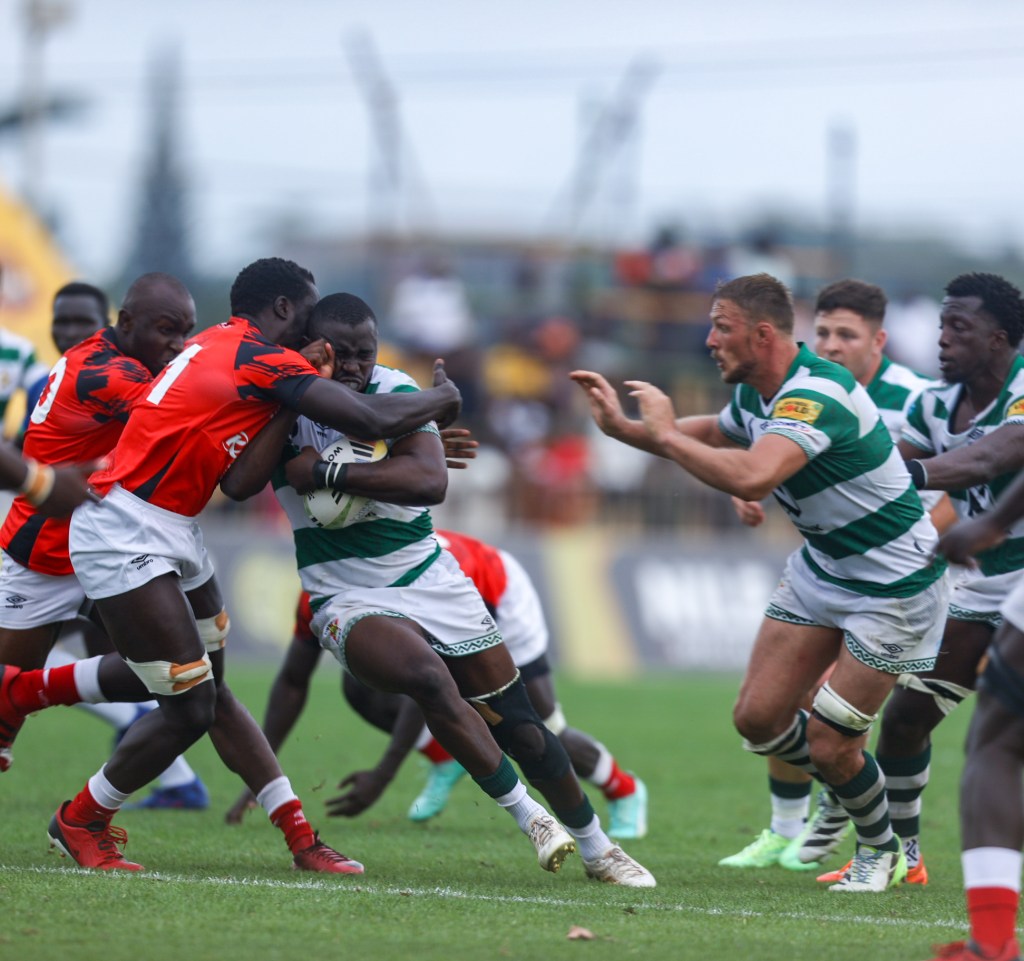
Up until the semi-final, Kenya remained in contention but a close 23-25 loss to the eventual champions Zimbabwe put paid to their challenge. Jerome Paarwater, the Kenya Simba’s coach appeared to apportion the blame to the match official after Kenya made a decision to restart the game without taking a conversion. “We have a choice to decline a conversion but the referee did not give us that chance,” he explained.
After the loss, Kenya Simba’s appeared to have lost the fight under their belly and fell to a spirited Algeria 5-15 in the play off, the same team that beat them in the semi-final last year. Hosts Uganda avoided relegation by beating Ivory Coast in the seventh-place play off. Morocco returned to the fray after nearly seven years out of top flight rugby to finish sixth.
Rugby Africa season takes a break for now with the women’s sevens competition scheduled for South Africa in November although some of the teams could be in Kenya for Safari Sevens in October.
Rugby Africa Cup results
Match day 1, July 8, 2025: Zimbabwe 43 Morocco 9, Algeria 41 Ivory Coast 6, Namibia 55 Senegal 17, Kenya 32 Uganda 24.
Match day two, July 13, 2025
Play-off: Ivory Coast 3 Senegal 28, Morocco 24 Uganda 12.
Cup semi-final: Algeria 7 Namibia 21, Zimbabwe 25 Kenya 23
Match day three, July 19, 2025
Fifth place final: Senegal 33 Morocco 28
Third place play off: Algeria 15 Kenya 5
Seventh place play-off: Ivory Coast 17 Uganda 37
Cup final: Namibia 28 Zimbabwe 30.
Winning Zimbabwe team
Victor Mupunga, Simba Mandioma, Cleopas Kundiona, Godfrey Muzanargwo, Simba Siraha, Tinotenda Mavasere, Dylan Utete, Jason Fraser, Hilton Mudariki (captain), Ian Prior, Edward Sigauke, Kudzai Mashawi, Brandon Mudzekenyedzi, Matthew macnab, Tapiwa Mafura.
Bench: Liam Larkan, Bornwell Gwinji, Tadiwa Gwashu, Aiden Burnett, Keegan Joubert, Dion Khumalo, Bruce Houston.Technical Bench: Piet Benade (head coach), Ricky Chirengende (assistant coach), Gert Smal (consultant), Senna Esterhuizen (defence coach), Joel Carew (forwards & scrum coach), Denford Mutamangira (scrum coach), Ghafoer Lukan (S&C), T. J. Chifokoyo (general manager), Tichafara Makwanya (team manager), Tapfuma Parirenyatwa (team doctor), Shumirai A. Teraraj, Ali Becker (physios), Antoine Plasman (team analyst)

 Sports News Arena