
What was supposed to be the climax of a season for 7s rugby with a championship menu as well as a promotion and relegation battle during this year’s LA 7s was clouded with an announcement of a ‘new’ format for next season’s World Rugby Sevens World Series.
The announcement that the 12-team competition would be reduced further to eight and a creation of a second tier tournament as well as regional tournaments stunned the rugby fraternity. At the just concluded LA Sevens, the talking point was a justification for the change.
Players, team officials, various federation officials approached by www.thesportsnewsarena.com agreed to give their views off the record fearing a retribution from World Rugby. But, Steve Tomasin from the USA 7’s team bravely articulated the feelings of the majority when he posted a 10-minute rejoinder on X and his social media handle.
Tomasin’s Rejoinder
Tomasin’s rejoinder recalled that World Rugby has made changes to the formatt in the past three years and each time justified the decision. The first reason was that World Rugby wanted to conform to the Olympic format when the number of teams was reduced from 16 to 12.
Secondly, they stated it was imperative to make rugby all inclusive by accommodating the women’s teams. The third changes to the formatt was made in 2023 when World Rugby introduced a qualification and relegation where the top eight teams retained their corre status.
Teams finishing in the lower four had to fight it out for a promotion and relegation against the top four teams in the Challenger Series.
The first and the last of this format was hosted in Madrid, Spain in 2024 in the same year that World Rugby also included a ‘World Championship’ for the top eight teams after a winner was declared following the completion of the six-leg Series in Singapore. Although teams were dissatisfied with the changes, they grudgingly accepted and turned up.
Same Format
In Madrid, Kenya and Uruguay were promoted to the core status together with China. The word after this tournament was that the same format would be retained for the 2024/25 season. So teams were under the impression that this was the case for the final tournament in Los Angeles, California on May 3 and 4.
To the surprise of mainly the teams that finished in the bottom four and those who topped the Challenger Series, World Rugby reneged on this promise and boldly announced ‘another’ format that was different from what they had started at the start of the season. It is this new format that has sent ripples among the rugby fraternity.
In a statement, World Rugby claimed to have consulted widely to reduce the number of core teams from 12 to 8 and create a second tier competition as well as lay emphasis on regional tournaments. Those knowledgeable about the changes told SNA that a decision had already been made at the start of the season and was kept under a lock and key as the season progressed.
Waiting Period
The waiting period before the announcement was to monitor the performance of Great Britain and see whether they would finish among the top eight. The moment it became clear that Kenya could not overtake them, the die was cast, our source confirmed. Consequently, it was just a matter of time to wait for the ‘right’ moment to make the announcement.
Teams prepared knowing that World Rugby would keep their word by ensuring a relegation and promotion format was adhered to. When the teams booked their flights and were committed to traveling to LA, World Rugby made the announcement. This was because it was too late for the teams to make alternative arrangements.
Not Traveled
The teams we spoke to said had they known the format had been changed, they would not have traveled. That would have effectively affected the second tier competition. One official who did not want his name disclosed said: “We would not have traveled. It is wrong for World Rugby to change the script. When you are running a race, you have a definite starting and finishing point. In this case, World Rugby ended the race prematurely by ending the race early at a different finishing point,” the source explained.
Team officials and players confirmed to SNA that they were not consulted. Two officials from the participating countries gave more information by recalling how World Rugby had a zoom meeting with member Unions one week before the LA tournament where there were pointers towards a new format. “We were not consulted,” the source stated.
Separate Pitch
At the weekend, the teams played grudgingly at a separate pitch that indicated the unpreparedness of the new format. The player area of second tier teams was a makeshift temporary tented area that did not match the environment accorded to the top tier teams on the main pitch who had cosy changing rooms. There were clear signs posted stating that there were no washrooms for fans once they went beyond a certain point.
Everywhere, current and past players discussed the unfavorable changes. Union officials were categorical that they voted against the changes. SNA authoritatively learned that Rugby Africa voted against the new format.
What could have precipitated the changes? World Rugby said it was a decision to ensure financial viability. A quick rejoinder by officials who have hosted World Rugby tournaments disagreed saying their local organizing committees often raised the bulk of tournament expenses while World Rugby only offered a fraction. At the end of each tournament, such hosts were left with a deficit!
Emerging Teams
Another theory about the new format arises from the emergence of non-traditional rugby teams that have been punching above their weight. In the just concluded championship, Argentina won the overall Series and Spain finished among the top three as well as runner up in the championship.
During the regular season, some of these teams have beaten the top tier teams. While this is good for competition, the defeats could have sent wrong signals to the top tier nations with a tradition for rugby.
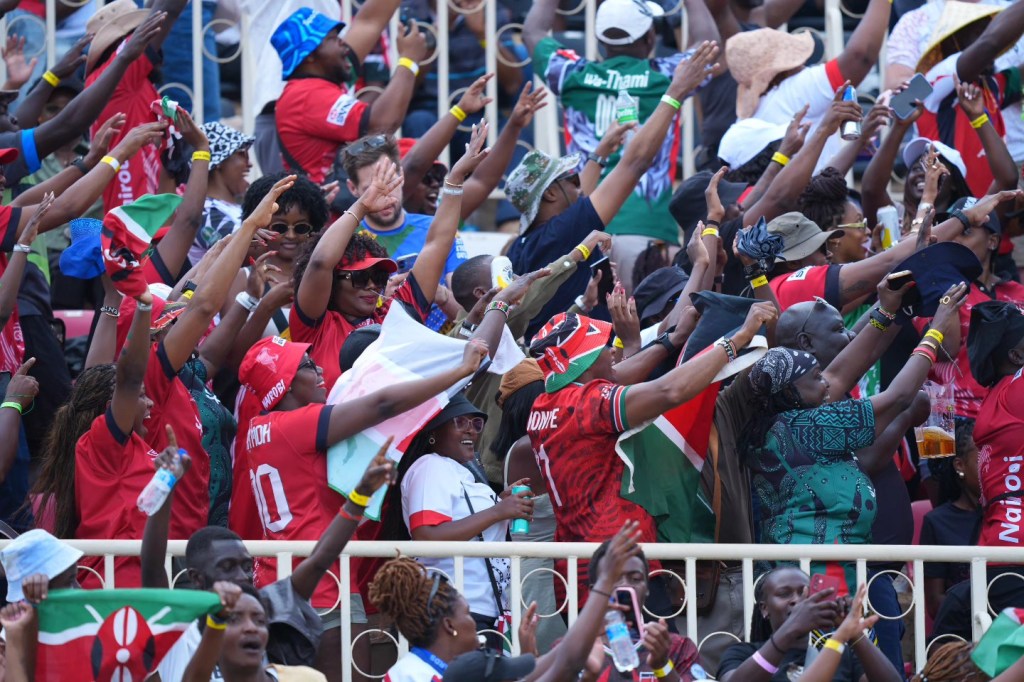
It was under this controversial environment that eight teams played at a different pitch that attracted a much larger and vocal crowd than what was being witnessed on the main pitch which had large sections unoccupied. The match between Kenya and hosts USA was watched by a very large crowd that filled the stands and spilled over to other areas.
Going Forward
Going forward, most of the coaches and players had one resolve. Their response could have sent a strong warning to World Rugby. “We can only control what we can. Our resolve is to make this second tier competition bigger than anything they have seen. Because we can only play in two tournaments, the option would be to play in many other invitational tournaments who are willing to accommodate us,” they resolved. The coaches struggled to motivate their players to step in the field and play in the new format.
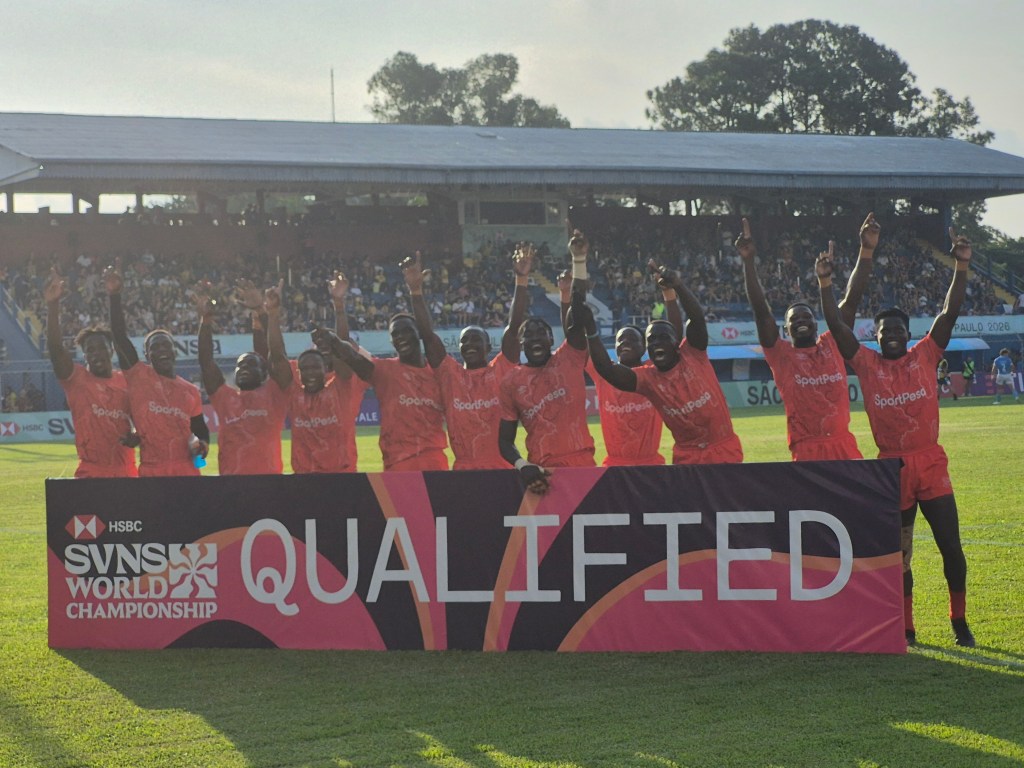
At the end of the two days, USA, Uruguay, Kenya and Germany men’s teams qualified to play in the new second tier competition. Qualifiers in the women’s category were China, Brazil, Kenya and Spain.


 Sports News Arena